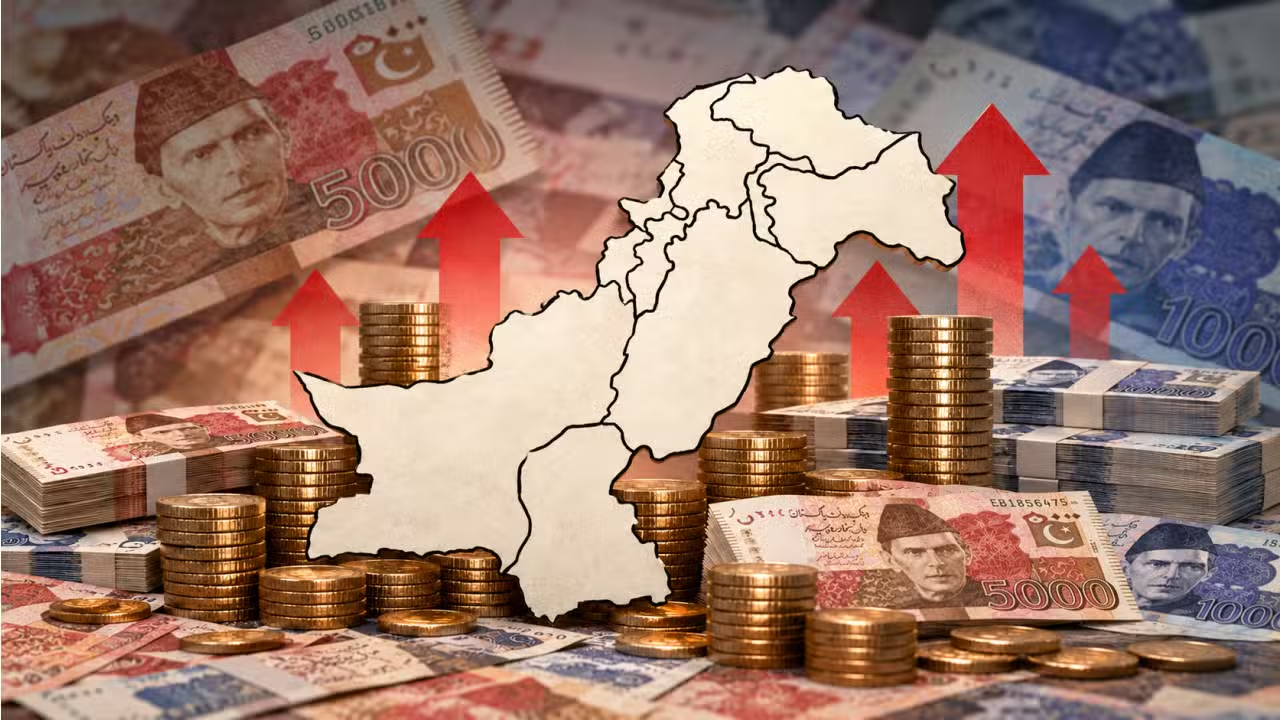
The federal government of Pakistan is planning to borrow Rs. 6,046 billion from domestic sources to finance a major portion of its fiscal deficit, while gradually reducing its dependence on short-term debt. The proposed borrowing strategy aims to improve debt management, reduce refinancing pressures and create a more sustainable structure for government financing.
According to the government’s borrowing plan, net domestic borrowing is projected at Rs. 6,046 billion against an estimated federal fiscal deficit of Rs. 7,020 billion. This means domestic sources are expected to finance approximately 75 percent of the overall deficit.
The strategy reflects the government’s intention to rely more heavily on domestic financial instruments while managing its outstanding liabilities through a shift towards longer-term borrowing.
One of the key elements of the plan is the reduction of short-term debt, particularly Treasury Bills (T-Bills). The government intends to achieve a net retirement of Rs. 2,592 billion in short-term borrowing during the planned period.
Rather than continuing to depend heavily on short-term instruments, authorities intend to replace maturing liabilities with financing options that have longer repayment periods. This approach could help reduce the frequency of refinancing and provide greater certainty in managing public debt.
Short-term government borrowing is commonly used to meet immediate financing requirements. However, excessive dependence on such instruments can expose governments to refinancing risks, particularly when large amounts of debt mature within a limited period.
When short-term liabilities become due, the government must arrange fresh financing to repay or roll over the outstanding amounts. If market interest rates increase or investor demand weakens, refinancing can become more expensive and difficult.
By shifting towards longer-tenor instruments, the government aims to reduce these pressures and improve the overall maturity profile of its domestic debt.
The proposed borrowing programme also highlights the importance of Pakistan’s domestic financial market in meeting federal financing requirements. Banks and other financial institutions are expected to remain important participants in government debt instruments.
Longer-term financing can offer several advantages for public debt management. It may reduce the immediate burden of maturing obligations and allow the government to spread repayment requirements over a longer period.
However, borrowing costs will remain an important consideration. Longer-term instruments can carry different interest rate requirements depending on market conditions, investor expectations and the government’s overall financial position.
The government’s borrowing strategy also comes amid continuing pressure on public finances. Debt servicing, development spending, administrative expenses and other financial obligations remain major components of federal expenditure.
Pakistan’s fiscal position is closely linked to its ability to manage revenue collection, control spending and maintain economic stability. Higher borrowing requirements can increase the government’s interest payments, potentially leaving fewer resources available for development projects and public services.
Domestic borrowing also has implications for the private sector. If government financing absorbs a large share of available funds within the banking system, businesses may face challenges in accessing affordable credit for investment and expansion.
For this reason, balancing public borrowing with private-sector financing remains an important economic consideration.
The planned Rs. 6,046 billion domestic borrowing programme indicates a shift in the government’s approach to managing its financial requirements. Reducing short-term debt exposure and extending borrowing tenors could help improve refinancing management.
However, the longer-term impact will depend on borrowing costs, fiscal discipline, revenue growth and the government’s ability to manage its overall debt obligations.