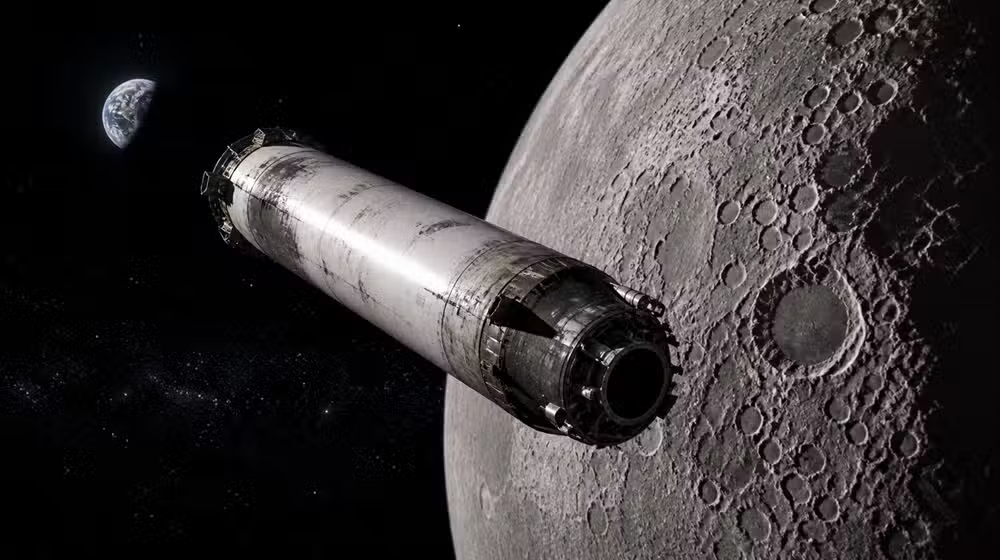
A massive section of a SpaceX Falcon 9 rocket is expected to crash into the Moon on August 5, 2026, according to astronomer Bill Gray. The object is believed to be the upper stage of a Falcon 9 rocket and is estimated to be nearly the size of a five-story building.
Gray, who operates the astronomy website Project Pluto, stated that the rocket debris is likely to impact near the Einstein Crater on the Moon’s Earth-facing side. The projected impact area is reportedly close to the 10 o’clock position along the lunar edge visible from Earth.
The incident has attracted attention from astronomers and space enthusiasts around the world, as uncontrolled rocket debris colliding with celestial bodies remains a relatively rare event. Scientists believe the impact could create a fresh crater on the lunar surface and may offer researchers an opportunity to study the effects of artificial objects striking the Moon.
Space missions often leave rocket stages drifting through space after completing their primary tasks. In some cases, these objects remain in unstable orbits for years before being pulled toward a planet or moon due to gravitational forces. Experts say the Falcon 9 upper stage likely lost control after completing its mission and gradually entered a trajectory toward the Moon.
The Moon has previously been struck by spacecraft debris, both intentionally and accidentally. However, incidents involving large rocket stages continue to raise discussions about space debris management and long-term sustainability in outer space exploration.
As commercial space activity expands globally, concerns regarding abandoned rocket parts and orbital debris are becoming increasingly important. Space agencies and private companies are now under growing pressure to develop safer disposal systems and better tracking methods for objects left in space.
The expected lunar impact is not considered dangerous for Earth, but astronomers will likely monitor the event closely using telescopes and space observation systems. Researchers hope the collision may also provide valuable data about the Moon’s surface composition and impact dynamics.
SpaceX has not yet publicly commented on the reported lunar impact prediction. Further observations are expected in the coming months as scientists continue tracking the rocket stage’s path through space.