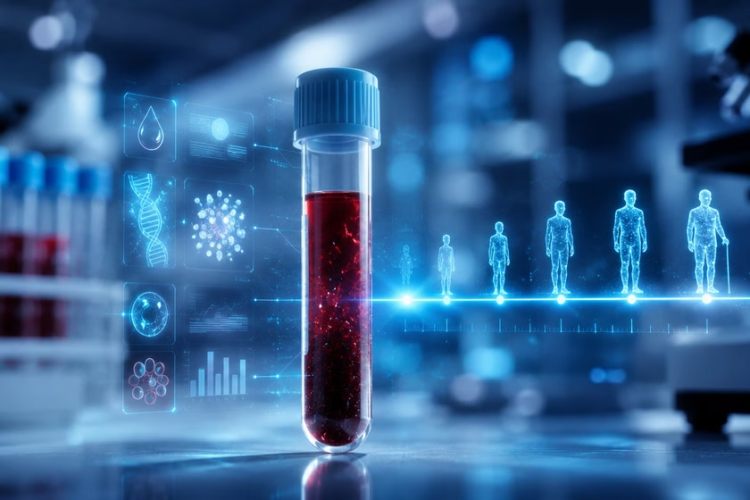
A groundbreaking study led by Duke Health has revealed that tiny RNA molecules found in blood could help predict short-term survival chances among older adults.
The research, conducted in collaboration with the University of Minnesota and published in Aging Cell, focused on small RNA molecules known as piRNAs.
Researchers discovered that a specific group of six piRNAs could predict two-year survival outcomes with an accuracy rate of up to 86 percent. The findings are being viewed as a major advancement in aging research and preventive healthcare.
According to scientists involved in the study, these tiny molecules may serve as important biological markers that reflect how the body ages over time. By analyzing piRNA patterns through a simple blood sample, doctors could potentially identify individuals who face higher short-term health risks.
The researchers explained that the technology is still in its early stages, but the results highlight the growing role of precision medicine and biomarker-based diagnostics in healthcare. Experts believe such tools could eventually support personalized treatment plans and early medical interventions for aging populations.
The study also strengthens ongoing scientific efforts to better understand the biological processes associated with aging, disease progression, and overall life expectancy. Scientists hope future research will further validate the findings across larger and more diverse populations.
Healthcare experts say early detection of health decline through blood-based biomarkers may improve preventive care strategies and help patients make informed medical and lifestyle decisions.
The findings could also contribute to broader public health planning, particularly as global populations continue to age and healthcare systems face increasing pressure to manage chronic illnesses and age-related conditions.
While the blood test is not yet available for public use, researchers remain optimistic that continued advancements in RNA research and biotechnology could eventually make such diagnostic tools part of routine healthcare screening.
The study reflects the rapidly evolving field of longevity science, where scientists are increasingly exploring molecular indicators to better predict health outcomes and support healthier aging.
Topics #Aging Cell #Blood Test #city magazine #Duke Health #Healthcare #Healthy Aging #Longevity Science #Medical Research #News #Older Adults #Pakistan #RNA Research #Trending Pakistan #University of Minnesota