Pakistan produces nearly 800,000 university graduates every year, yet employment opportunities continue to lag behind the growing number of degree holders entering the workforce. As industries evolve, artificial intelligence reshapes traditional jobs, and economic growth remains slow, experts believe that academic qualifications alone are no longer enough. Developing an entrepreneurial mindset has become increasingly important for students seeking long-term career success.
The country’s employment landscape is facing multiple challenges. While many talented graduates pursue opportunities abroad, those who remain often encounter a highly competitive job market with limited vacancies. At the same time, rapid technological advancements are transforming industries, reducing demand for routine tasks, and increasing the need for digital skills, innovation, and adaptability.
In this changing environment, universities have an opportunity to prepare students not only for employment but also for entrepreneurship. Encouraging students to build businesses, solve local problems, and create new industries can contribute to economic growth while generating employment for others.
Entrepreneurship is increasingly being viewed as a practical solution to Pakistan’s economic challenges. By fostering innovation and business development, educational institutions can help strengthen local manufacturing, increase exports, encourage technological advancement, and create sustainable income opportunities across various sectors.
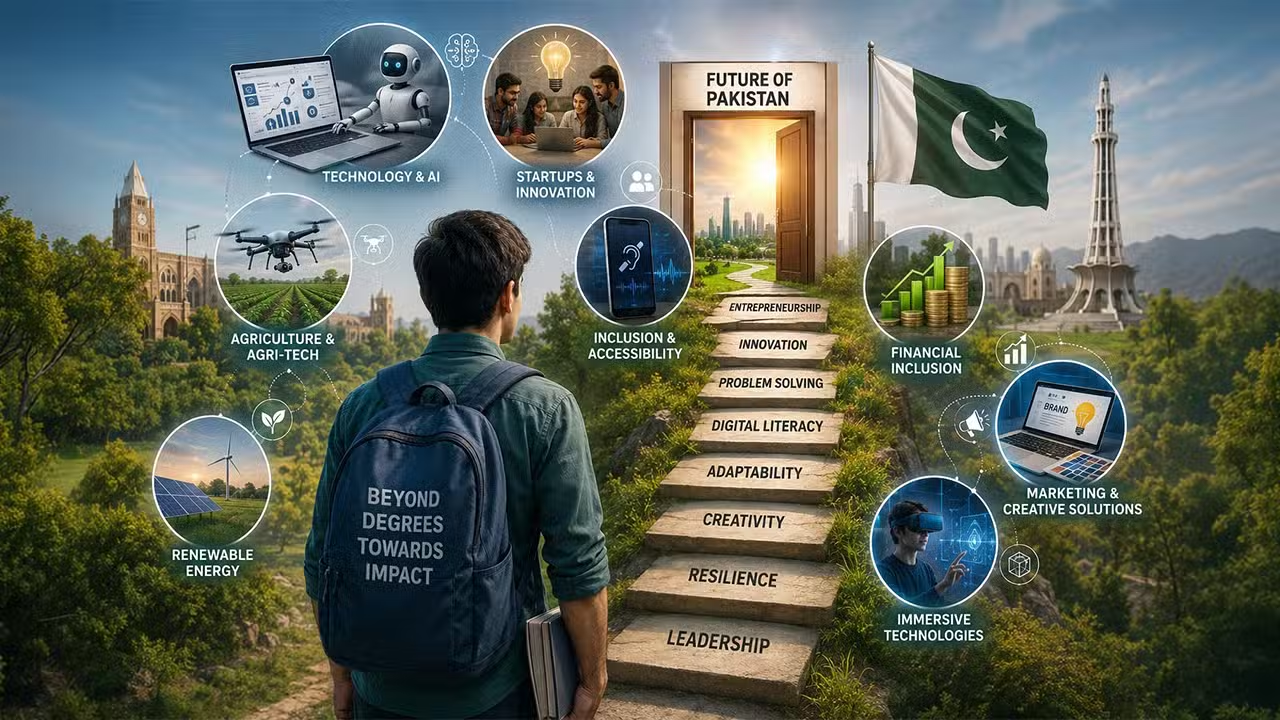
A growing number of Pakistani graduates are already demonstrating how entrepreneurial thinking can address real-world problems. Habib University has emerged as one example of an institution promoting startup culture, with alumni launching businesses across technology, agriculture, renewable energy, financial services, accessibility, waste management, marketing, and immersive technologies.
One notable example is Plouton AI, co-founded by Computer Science graduate Furqan Karim Kidwai. The startup uses artificial intelligence to automate complex financial operations, including payroll processing, reconciliation, financial reporting, and compliance. By integrating with platforms such as NetSuite, Xero, QuickBooks, and Excel without relying on traditional APIs, the company helps businesses improve efficiency while reducing manual work.
Innovation is also transforming Pakistan’s agricultural sector. Farmevo, co-founded by Habab Idrees, combines autonomous drone technology with artificial intelligence to improve agricultural and industrial operations. The platform enables organizations to collect high-quality aerial data and convert it into actionable insights, helping users make better operational decisions.
Digital transformation has become another major area of opportunity. Anomoz Softwares, founded by Syed Ahsan Ahmed, develops customized digital solutions, including websites, customer relationship management (CRM) systems, and business process automation, helping organizations modernize their operations in an increasingly digital economy.
Sustainability is also inspiring entrepreneurial ventures. TrashIt, co-founded by Anusha Fatima, focuses on waste recovery and composting across multiple cities in Pakistan. The company operates with a production capacity of 20 tons per month and has expanded its environmental efforts through a European Union-funded Agri Waste Recovery Hub in District Thatta, promoting responsible waste management and environmental conservation.
Technology is making a meaningful difference in accessibility as well. ConnectHear, founded by Arhum Ishtiaq, has grown into South Asia’s largest disability technology platform. Inspired by his experience growing up with deaf parents, the startup leverages artificial intelligence to improve communication and accessibility for people with disabilities, promoting greater inclusion and economic participation.
Pakistan’s renewable energy sector is also benefiting from young entrepreneurs. OneWatt Energy, co-founded by Electrical Engineering graduate Osama Rizwan, provides solar photovoltaic installations and sustainable energy solutions that contribute to clean energy adoption while addressing the country’s growing energy needs.
Marketing and branding have become another area of innovation. O Marketing, established by Communication and Design graduate Omer Intesar, delivers customized marketing strategies that help businesses strengthen brand recognition, improve customer engagement, and accelerate business growth.
Financial inclusion remains an important priority as well. Ping Up, co-founded by Syed Affan Aslam, provides accessible investment opportunities and financial literacy tools designed to encourage responsible financial management among individuals. Meanwhile, FortunaXR, founded by Muhammad Hasham Qazi, develops virtual and augmented reality solutions for education, tourism, training, and entertainment, showcasing the expanding role of immersive technologies in Pakistan’s digital economy.
These startups demonstrate that entrepreneurship extends beyond launching businesses—it is about identifying societal challenges and creating practical, technology-driven solutions. Whether improving agriculture, promoting renewable energy, enhancing accessibility, or advancing financial technology, these ventures illustrate how young Pakistani entrepreneurs are responding to the country’s evolving economic realities.
As automation and artificial intelligence continue transforming global industries, universities must expand their focus beyond conventional academic instruction. Alongside technical knowledge, students need critical thinking, problem-solving, digital literacy, leadership, financial management, and innovation skills that prepare them to create opportunities rather than simply seek employment.
Strengthening entrepreneurial education can help Pakistan build a more resilient economy, encourage innovation, and generate sustainable employment opportunities for future generations. By aligning higher education with the country’s economic needs, universities can play a vital role in shaping graduates who are equipped to drive business growth, technological advancement, and long-term national development.