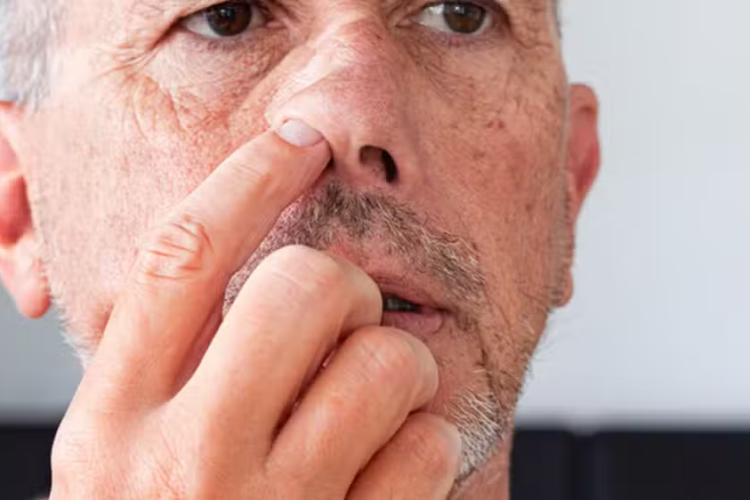
A recent study has raised questions about a possible connection between frequent nose picking and an increased risk of developing Alzheimer’s disease. While the findings are still preliminary, researchers say the results open new avenues for understanding how certain behaviors might impact brain health.
The research, conducted by scientists at Griffith University in 2022, suggests that damage to the inner lining of the nose could play a role in this process. According to the study, repeated irritation may make it easier for harmful bacteria to travel from the nasal cavity to the brain.
This pathway is significant because it may trigger immune responses similar to those observed in Alzheimer’s disease. In particular, the presence of certain bacteria could stimulate the buildup of proteins associated with the condition, although this mechanism has not yet been confirmed in humans.
It is important to note that the current evidence is largely based on animal studies. While the results are scientifically intriguing, experts caution against drawing definitive conclusions at this stage. More research, particularly involving human subjects, is needed to determine whether the link holds true in real-world scenarios.
Health professionals emphasize that maintaining good hygiene and avoiding behaviors that can damage sensitive tissues, such as the inside of the nose, is generally advisable. However, occasional nose picking is not being presented as a direct cause of Alzheimer’s disease.
The study highlights the broader importance of understanding how infections and inflammation may influence neurological health. Researchers continue to explore how everyday habits and environmental factors could contribute to long-term brain conditions.
As scientific investigation progresses, findings like these serve as a reminder that even small aspects of daily behavior can have complex biological effects. For now, experts recommend viewing the study as an early insight rather than a confirmed medical risk.
Topics #Alzheimer’s disease #brain health #city magazine #Griffith University #health research #medical studies #Neuroscience #News #Pakistan #public health #Trending Pakistan