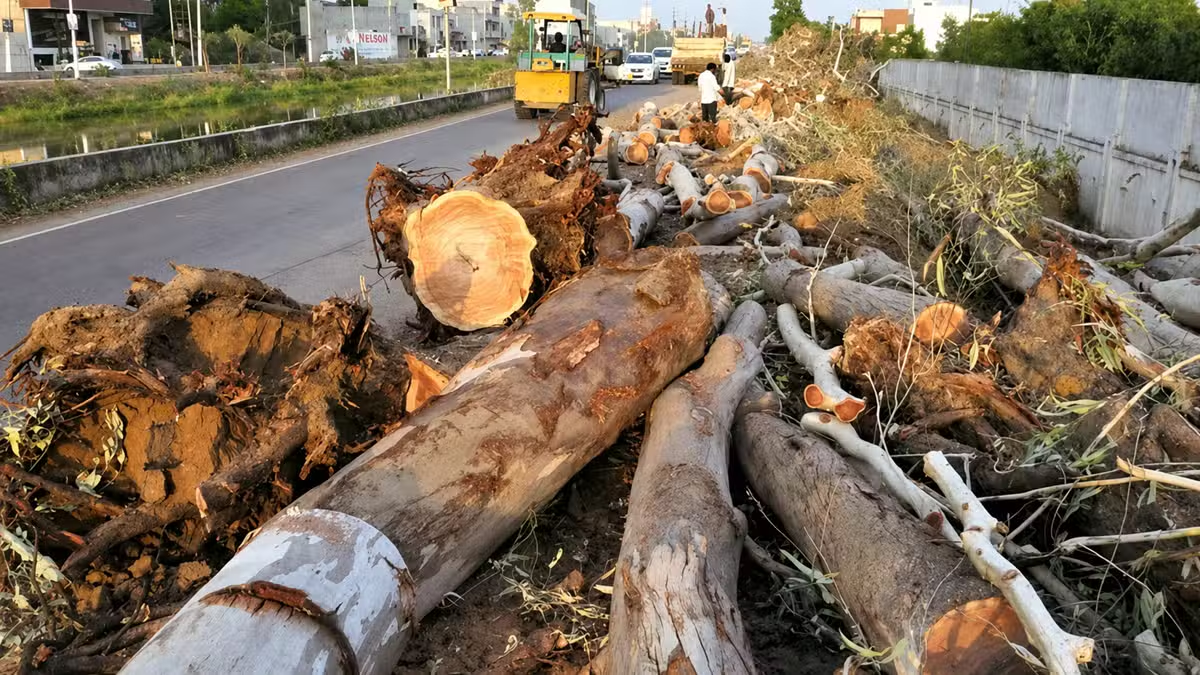
The expansion of Hub River Road in Karachi has raised environmental concerns as hundreds of semi-mature neem trees along an eight-kilometre stretch face removal to make way for road rehabilitation and widening work being carried out by the National Highway Authority (NHA).
The development has drawn attention to the challenges of balancing infrastructure improvements with environmental protection in Pakistan’s largest city, where green spaces and tree cover are already under pressure from rapid urbanisation.
The affected trees, many of them neem, were planted along Hub River Road to provide shade and improve the surrounding environment. However, the ongoing road expansion has placed these trees at risk, raising questions about the planning and coordination of development projects involving public land and urban greenery.
According to reports, the NHA is undertaking the road-widening project as part of its rehabilitation plan for the busy route. The authority maintains that the land where the trees were planted falls within its jurisdiction and that the local town administration had been informed about the planned development work before the plantation took place.
Asad Mehmood, assistant director of maintenance at the NHA, said the authority had notified the town municipality about the road rehabilitation plan before the plantation drive began.
He explained that the road required rehabilitation to meet public needs and that the administration had been informed about the intended work in advance. Mehmood also claimed that only a limited number of trees had been cut during the current phase of construction.
Despite the authority’s explanation, the situation has highlighted the need for stronger coordination between government departments responsible for road infrastructure, municipal administration and environmental management.
Karachi continues to face environmental challenges associated with rising temperatures, air pollution, traffic congestion and a shortage of green spaces. Trees play an important role in mitigating these problems by providing shade, absorbing carbon dioxide, trapping some airborne pollutants and helping reduce the urban heat island effect.
Neem trees are particularly valuable in Karachi’s climate because they can tolerate relatively hot and dry conditions once established. Removing semi-mature trees can also mean losing years of growth, as newly planted saplings generally require time and proper care before they provide comparable shade and environmental benefits.
The Hub River Road project therefore raises an important question about how infrastructure development can proceed without unnecessarily reducing the city’s existing tree cover.
Road expansion can improve traffic movement, accessibility and road safety when properly planned. However, environmental considerations need to be incorporated into the design and execution of such projects, particularly in densely populated urban areas where mature and semi-mature trees provide valuable public benefits.
Environmental specialists and urban planners commonly recommend assessing the impact of construction on existing trees before work begins. Where removal is unavoidable, authorities can consider redesigning sections of the project, protecting trees wherever feasible and implementing a transparent compensatory plantation programme.
Such measures are most effective when replacement trees are planted at suitable locations, monitored regularly and maintained until they become established. Simply planting new saplings does not immediately compensate for the shade and ecological benefits lost when established trees are removed.
The ongoing work along Hub River Road also highlights the importance of public disclosure regarding development plans and environmental safeguards. Clear information about the number of trees affected, the reasons for their removal and plans for replacement could help residents better understand the project’s environmental impact.
For Karachi, the challenge extends beyond a single road project. The city needs reliable infrastructure, but it also requires a long-term strategy to preserve green spaces, increase tree cover and make neighbourhoods more resilient to extreme heat.
As the NHA continues its road rehabilitation and widening work, the treatment of trees along the eight-kilometre stretch will remain an important issue for residents concerned about the city’s environmental future.
Ensuring that road development and urban greening are considered together could help Karachi improve its transport network while protecting the natural assets that make urban life healthier and more sustainable.
The Hub River Road expansion serves as a reminder that infrastructure progress should be measured not only by wider roads and improved connectivity, but also by how effectively public authorities protect the environment for future generations.