Education is often measured through grades, exams, and outcomes, but the real weight children carry is rarely visible. On World Education Day 2026, the global theme of empowering youth to co-create education shifts attention toward a more human side of learning, one that recognises emotional wellbeing, comfort, and voice as essential elements of education.
For many children, learning begins not with curiosity, but with adjustment. From a young age, they are taught to fit into predefined systems, follow routines, and meet expectations set by adults. Success is often framed through performance rather than understanding, leaving little room for exploration or individuality.
Over time, this creates an environment where education feels heavy, not because of knowledge itself, but because of constant pressure. Children learn how to comply before they learn how to question. Their interests, ideas, and uncertainties are often sidelined in favour of rigid benchmarks and academic milestones.
In structured learning systems, children may appear confident and capable on the surface. However, beneath that appearance lies a quiet struggle. Many questions remain unasked, and curiosity is gradually replaced by fear of making mistakes. When education is delivered in unfamiliar languages or rigid formats, children adapt silently, carrying emotional and cognitive burdens that are rarely acknowledged.
This pressure does not usually stem from neglect or lack of care. Instead, it grows from good intentions, inherited systems, and a widespread desire to prepare children for an uncertain future. Parents and educators often equate pressure with discipline and success, without realising how deeply it can affect a child’s relationship with learning.
Creating space for dialogue, mistakes, and exploration is essential to restoring balance. When children are allowed to express confusion, learn at their own pace, and connect education with their lived experiences, learning becomes meaningful rather than overwhelming. Education then shifts from being a performance to becoming a process of discovery.
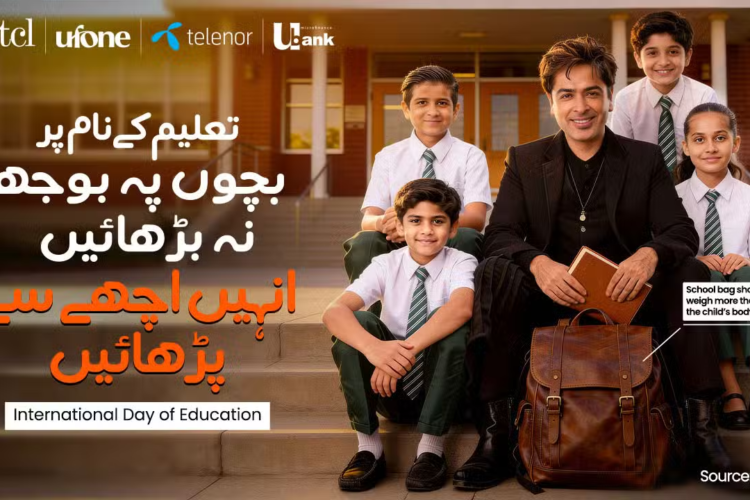
PTCL’s World Education Day campaign builds on this understanding by highlighting the unseen pressures children face in their learning journeys. The campaign draws attention to the emotional weight children carry, particularly when learning environments are disconnected from their mother tongue or emotional readiness. It encourages parents, educators, and institutions to pause and reflect on how education is being delivered.
Rather than focusing solely on what children learn, the campaign urges society to consider how children experience learning. Emotional safety, language familiarity, and inclusion play a crucial role in shaping confident and resilient learners.
When youth are invited to co-create their education, learning becomes lighter and more inclusive. Children feel heard, respected, and empowered to take ownership of their growth. Listening to children is not a distraction from education; it is the foundation of an education system that truly prepares the next generation for life, not just exams.