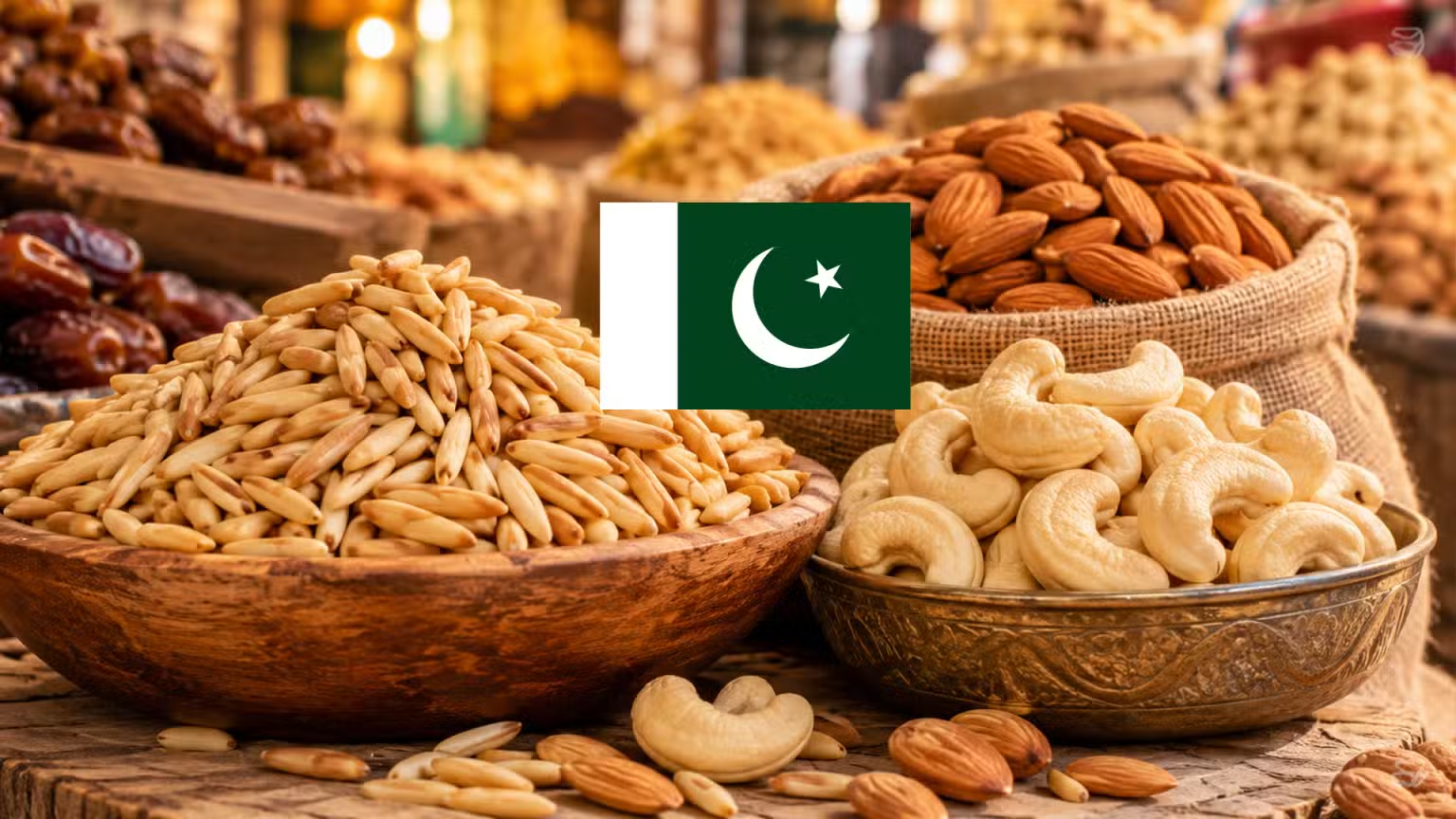
Pakistan’s dry fruit market generates an estimated Rs. 98 billion in annual household spending, highlighting the growing economic significance of almonds, walnuts, pistachios, cashews and other popular varieties. Despite the substantial market value, premium dry fruits remain relatively expensive, putting many varieties beyond the reach of ordinary households.
According to a household consumption analysis by Gallup Pakistan Digital Analytics, based on the Household Integrated Economic Survey (HIES) 2024-25, Pakistani households collectively spend approximately Rs. 98 billion on dry fruits every year.
Out of this amount, around Rs. 56 billion is spent specifically on almonds, walnuts, pistachios and cashews. These varieties account for a considerable share of the country’s overall dry fruit expenditure, reflecting their popularity despite their comparatively high prices.
Dry fruits have a strong connection with Pakistan’s winter food culture. As temperatures begin to fall, markets across the country fill with vendors selling almonds, walnuts, pistachios, cashews and chilgoza. Families also commonly purchase mixed dry fruit packages for household consumption, gifting and traditional winter gatherings.
However, the high cost of premium varieties means that not every household can afford to purchase them regularly. While some families include dry fruits in their everyday diets, others limit their purchases to special occasions or smaller quantities during the winter season.
The estimated Rs. 98 billion annual expenditure demonstrates the scale of consumer demand in Pakistan’s dry fruit market. It also highlights how seasonal food preferences contribute to spending patterns across different income groups.
Almonds and walnuts are among the commonly purchased varieties, while pistachios and cashews are also popular choices for snacks, desserts and traditional dishes. These products are available through local dry fruit markets, grocery stores and specialised retailers.
Chilgoza, in particular, is regarded as one of the more expensive winter delicacies in Pakistan. Its premium pricing makes it a less accessible option for many consumers, although it remains a popular seasonal purchase in several parts of the country.
The market also supports a wide network of traders, wholesalers, retailers and importers. Seasonal demand creates business opportunities for vendors, especially during winter when consumers increase their purchases of nuts and other traditional food products.
Pakistan’s dry fruit consumption is also influenced by household budgets and changing food prices. The cost of different varieties can vary depending on supply, market conditions, quality and the availability of locally produced or imported products.
The latest Gallup Pakistan Digital Analytics findings provide an insight into the financial importance of this market. With nearly Rs. 100 billion spent annually, dry fruits represent a significant category of household food expenditure in Pakistan.
The figures also underline the difference between overall market spending and individual household affordability. Although the market attracts substantial consumer spending, expensive premium varieties continue to remain an occasional purchase for many families.
As winter demand returns each year, Pakistan’s dry fruit market remains an important part of the country’s seasonal shopping activity and food consumption patterns.